Bloom's level: Analysing & Evaluating
Debate Partner
The Tinybot asks the student to take a position, then offers counterarguments and asks for evidence. It isn't about winning the debate. The point is for students to learn to back up their claims. The conversation ends with a summary and reflection.
What it's good for
- Civics and social studies
- Media literacy
- Ethical and social issues
- Preparing for debates
- Working with controversial questions
- Developing critical thinking
- Topics with more than one point of view or more than one possible solution
Not suitable for: memorising facts, explaining new material, questions with a single right answer, or topics with no room for discussion.
Sample prompts
The teaching material includes sample prompts for the subjects and topics in the table below. That said, you can use Tinybots in any subject and with any topic – the samples are mainly here for inspiration.
Subject
Topic
Age
Length
Civics
Should the voting age be lowered to 16?
15 to 17
10 minutes
History
Did Columbus’s voyages benefit humanity overall?
13 to 15
15 minutes
Geography
Should cities limit car traffic?
15 to 16
10 minutes
Media Literacy
Should social media platforms remove misinformation?
15 to 17
10 minutes
Science
Should zoos be part of modern wildlife conservation?
12 to 14
10 minutes

catalogue of educational chatbots
11 Tinybots. One for every stage of learning.
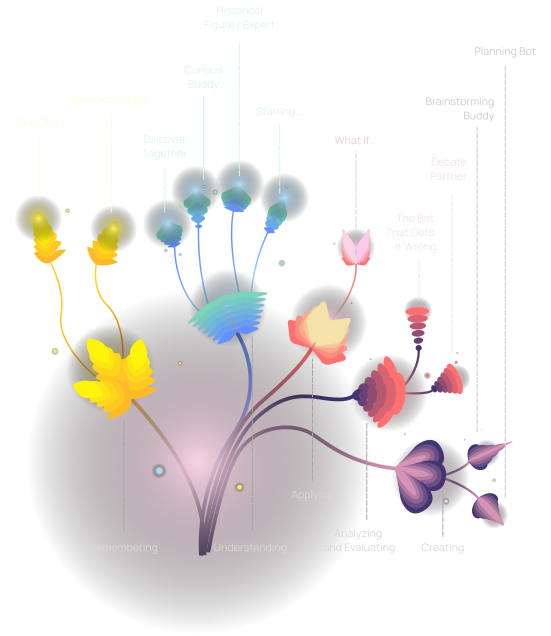
To make them easier to navigate, we’ve grouped the Tinybots into categories based on the revised Bloom’s taxonomy. The flower diagram shows the cognitive levels, named at the bottom of the image, with the individual Tinybots branching out from them at the top. The categories help Tiny set the right learning goals and assessment criteria, which we then use to give you and your students feedback on each conversation.