Bloom's level: Analysing & Evaluating
The Bot That Gets It Wrong
The Tinybot deliberately says things that are untrue or misleading. The students' job is to spot the mistakes, explain why they're wrong and back this up with evidence. It builds fact-checking skills using material students already know.

What it's good for
- Developing critical thinking
- Fact-checking
- Recognising half-truths and manipulation
- Building information literacy
- Revising material through analysis
Not suitable for: explaining new material, learning basic concepts, topics students haven’t covered yet, or quickly getting across a lot of information.
Sample prompts
The teaching material includes sample prompts for the subjects and topics in the table below. That said, you can use Tinybots in any subject and with any topic – the samples are mainly here for inspiration.
Subject
Topic
Age
Length
History
The Compromise of 1850 and its consequences
14 to 15
10 minutes
Physics
Newton’s First Law (the law of inertia)
12 to 14
10 minutes
Geography
Monsoon climate in Asia
13 to 14
10 minutes
Chemistry
Neutralization of acids and bases
15 to 16
10 minutes
Computer Science
Phishing and secure sign-in
13 to 15
10 minutes

catalogue of educational chatbots
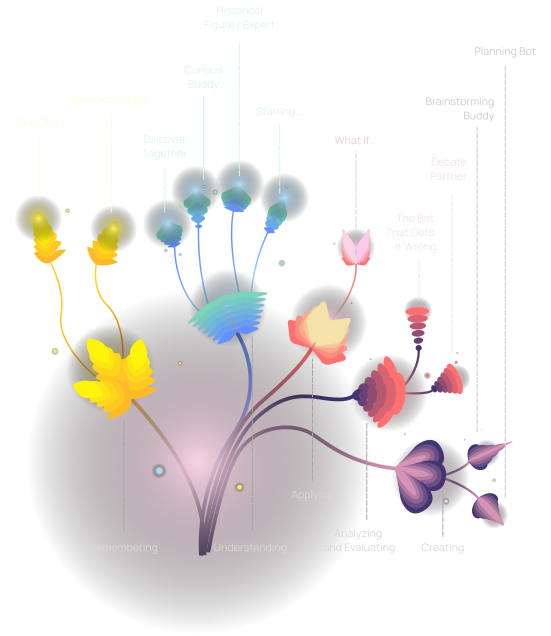
11 Tinybots. One for every stage of learning.
To make them easier to navigate, we’ve grouped the Tinybots into categories based on the revised Bloom’s taxonomy. The flower diagram shows the cognitive levels, named at the bottom of the image, with the individual Tinybots branching out from them at the top. The categories help Tiny set the right learning goals and assessment criteria, which we then use to give you and your students feedback on each conversation.